


Not only does organic production help reduce public health risks, mounting evidence shows that food grown organically are rich in nutrients, such as Vitamin C, iron, magnesium, and phosphorus, with less exposure to nitrates and pesticide residues in organically grown fruits, vegetables, and grains when compared to conventionally grown products. “organic trade association
Organic foods are hormone and GMO-free, contain fewer pesticides (if any), use fewer preservatives and often contain a higher level of nutrients.
Food additives and preservatives—and even some antibiotic resistant bacteria—in non-organic foods such as meat can have toxic effects on the body and contribute to long-term health issues, although more studies need to be done to prove the severity of these claims. Individuals with food sensitivities may also find organic foods easier to digest than non-organic or more heavily processed alternatives.
Organic livestock raised for meat, eggs, and dairy products must be raised in living conditions accommodating their natural behaviors (such as the ability to graze on pasture) and fed organic feed and forage. They may not be given antibiotics, growth hormones, or any animal by-products.
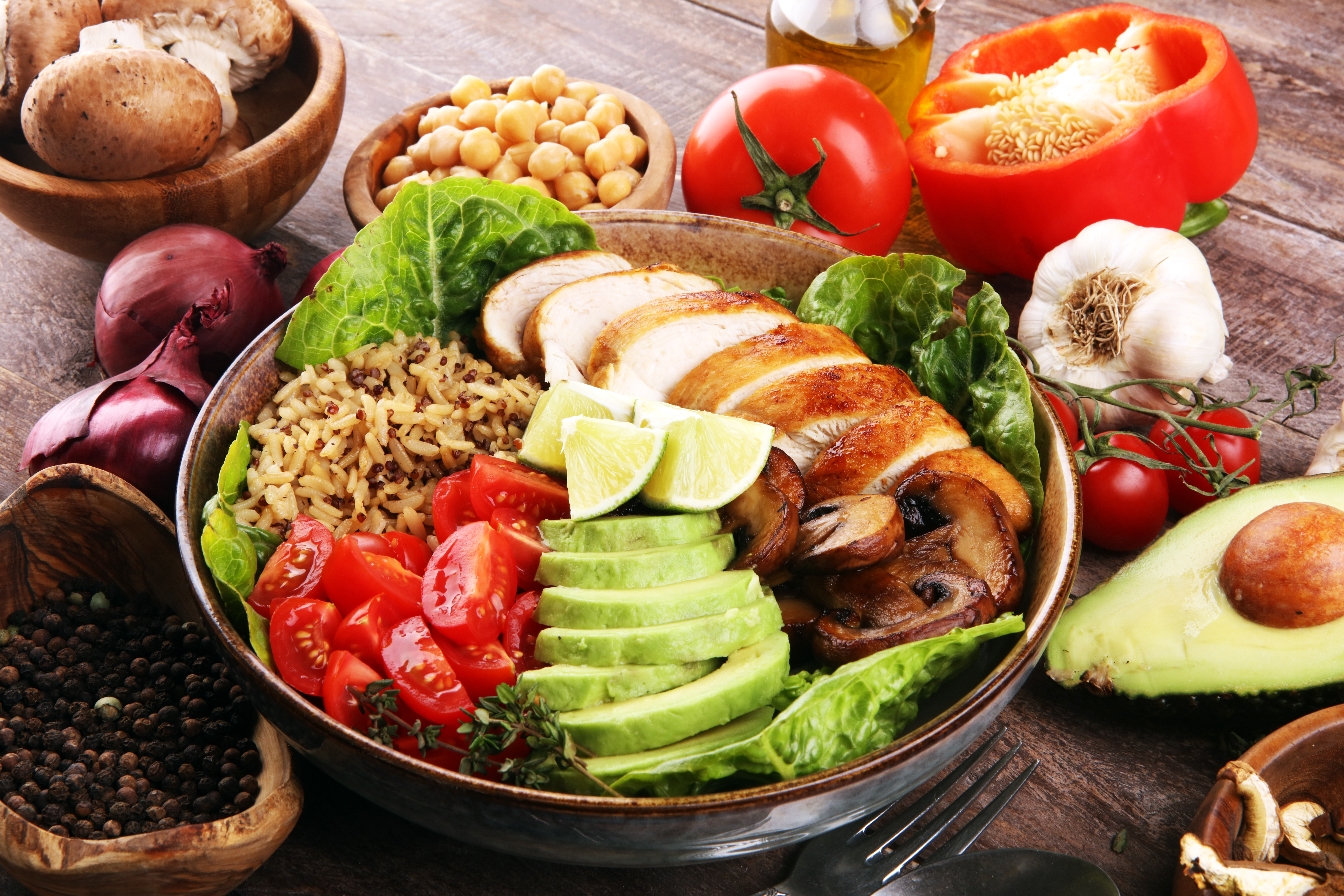
what does it mean to eat organic?
USDA certified organic foods are grown and processed according to federal guidelines addressing the following factors:
- Soil quality
- Animal raising practices
- Biologically based farming methods including regular crop rotations
- Organic producers must rely on natural substances, without most conventional pesticides, bioengineering or ionizing radiation
- Animals are not given antibiotics, growth hormones or fed animal byproducts
- Genetically modified organisms (GMOs) are not allowed
- Only pesticides made with natural ingredients can be used
There are different certification levels of “organic.” These are:
- 100% organic. “100% organic” can be used to label any product that contains 100% organic ingredients (excluding salt and water, which are considered natural). Most raw, unprocessed farm products are 100% organic. Many grains, oats and flours can also be labeled “100% organic.”
- Organic. “Organic” can be used to label any product that contains a minimum of 95% organic ingredients (excluding salt and water). Up to 5% of the ingredients may be nonorganic agricultural products that aren’t available as organic.
- Made with organic. “Made with organic” can be used to label a product that contains at least 70% organically produced ingredients (excluding salt and water). The nonorganic portion must also follow USDA guidelines. These products can’t be labeled “USDA Organic.”
- Specific ingredient listings. The specific organic ingredients may be listed in the ingredient statement of products containing less than 70% organic content. These products can’t be labeled “USDA Organic.”
“Land can’t be certified organic until 36 months have passed since any prohibited substances were used on the land.”
Benefits of organic foods
When it comes to organic vs. nonorganic foods, organic foods offer:
- Reduced exposure to pesticides and insecticides. This is a significant benefit of organic produce and grains.
- Increased exposure to omega-3 fatty acids. Livestock fed through grazing usually have higher levels of omega-3 fatty acids, which provide healthy heart benefits.
- Less exposure to cadmium. Studies have shown significantly lower levels of the toxic metal cadmium in organic grains. Cadmium is naturally found in soil and absorbed by plants.
- Increased levels of vitamins, minerals, antioxidants and other beneficial micronutrients. Organically grown fruits, vegetables and grains have higher amounts of vitamin C, vitamin E and carotenoids. They also have higher amounts of the minerals calcium, potassium, phosphorus, magnesium and iron.
- Less bacteria. Less exposure to bacteria in meat.
- Less exposure to antibiotics. Eating organic meats leads to less exposure to antibiotics and growth hormones that have been used to treat livestock. These medicines may lead to antibiotic resistance and other problems in humans.
And when it comes to the environment, organic foods have an upside.
“Organic foods and organic farming are built on the principles of preserving soil and water quality and creating little or no pollution,” highlights Smith. “Not using chemical or sewage as fertilizer reduces toxic runoff into rivers, lakes and ultimately into drinking water.”
Leave a Reply